Daisy Flower Line Art: A Designer's Real-World Review
As a designer who spends more time staring at stitch previews than actual sunlight, I am always skeptical of "simple" designs. There is a misconception in our craft that minimalism equals ease. Often, the opposite is true. When I first pulled up the Daisy Flower Line Art file on my screen, my initial reaction was one of cautious optimism. The lines were crisp, the spacing felt intentional, and the overall silhouette promised a clean finish. But a pretty vector on a monitor does not always translate to a beautiful finished product on fabric. I needed to know if this design could hold its own in a real commercial or personal embroidery project.
The First Impression: Clean Lines and Versatile Mood
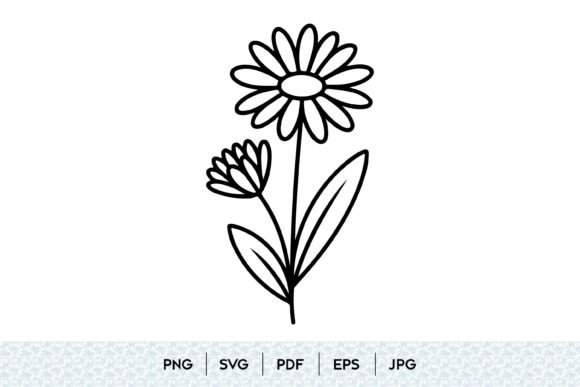
The visual personality of this Illustrations asset is undeniably modern. It leans heavily into the botanical line drawing trend that has dominated home decor and apparel for the last few years. The shape is organic but controlled, avoiding the messy, over-detailed look that often causes thread breaks or bird nests in smaller hoops. What struck me most was the balance between the petals and the center; it feels like a simple flower sketch that retains enough character to be recognizable from across a room.
For those of us running a craft business, mood matters. This design exudes a calm, cheerful vibe without being childish. It fits perfectly into the current aesthetic of boutique branding where less is more. Whether you are aiming for a rustic farmhouse look or a sleek, minimalist style, the Daisy Flower Line Art offers a neutral yet engaging foundation. It is the kind of design assets piece that doesn't scream for attention but quietly elevates the item it adorns.
Real-World Application: From Tote Bags to Baby Gifts
To truly test the waters, I imagined this design applied to a few specific scenarios that many Etsy sellers and handmade shop owners face daily. First, consider a canvas tote bag design. Canvas has a distinct weave, and heavy fills can sometimes distort the fabric. Because this design relies on outlines, it is an excellent candidate for tote bags. A single run of running stitch or a light satin stitch border would look incredibly professional here, offering durability without stiffness.
Next, picture this on a sweatshirt embroidery project. Fleece and French terry are tricky; they eat up detail. However, the open nature of this floral outline allows the texture of the sweatshirt to peek through, creating a cohesive look rather than a plastic-like patch sitting on top. For baby embroidery, such as a onesie or a nursery blanket, the softness of the line work is ideal. Babies have sensitive skin, and dense stitching can be irritating. This design, when digitized with appropriate underlay and low density, becomes a gentle, personalized touch for a personalized gift.
I also see strong potential for holiday embroidery or spring-themed collections. Imagine a set of kitchen tea towels featuring this daisy in yellow and white thread. It is a classic combination that sells well at craft fairs. The simplicity allows the color of the thread to do the heavy lifting, making it a cost-effective option for small shop product lines where margin matters.
Technical Considerations and Fabric Challenges
While the design is promising, we must discuss where caution is required. If you are working with a machine embroidery design derived from this Graphics file, the stitch density is your biggest variable. On stretchy fabrics like jersey knits or performance wear, even a simple outline can cause puckering if the stabilizer isn't up to the task. I strongly advise using a cut-away stabilizer for anything that will be washed frequently, rather than tear-away, to maintain the integrity of the flower shape over time.
Curved surfaces present another hurdle. If you plan to put this on a cap or a structured hat, the center of the daisy might distort if the hoop placement isn't perfect. The petals radiating outward need space to breathe. In tight hoop size constraints, ensure the outer edges of the petals do not get too close to the hoop edge, which can lead to skipped stitches. Furthermore, on dark fabrics, a simple outline might get lost unless you use a high-contrast thread color or consider a slightly thicker stitch width to ensure visibility.
One specific area to watch is the transition points in the line work. If the digital file is converted into an applique design, the edges need to be sharp. If it remains a standard stitch-out, ensure the corners of the petals are defined. Blurry corners can make a crisp design look amateurish. Always test the design on scrap fabric that matches your final material. Check how the thread colors interact with the fabric texture; sometimes a matte thread looks better on linen, while a slight sheen works wonders on satin pillow covers.
Enhancing Brand Value and Customer Trust
In the world of commercial embroidery, consistency is key to building buyer engagement. Using a high-quality base image like Daisy Flower Line Art ensures that every item leaving your studio looks uniform. Customers trust brands that pay attention to detail. A clean, well-executed floral motif signals professionalism. It tells the buyer that you care about the aesthetics of the handmade product, not just the speed of production.
This design also excels in creating printable mockups for your online store. Because the lines are so clear, they photograph beautifully. You can create stunning printable mockup images for your Etsy listings without needing to stitch every single sample first. This saves time and resources while still giving customers a realistic idea of the custom apparel or home goods you offer. A strong visual presentation directly influences the perceived value of your work, allowing you to price your items more confidently.
Final Verdict and Practical Notes
After evaluating the potential of this design, I believe Daisy Flower Line Art is a versatile tool for any creative entrepreneur. It bridges the gap between artistic expression and practical manufacturing. However, before you commit to a large batch of embroidered patch orders or a full line of spring dresses, keep these practical notes in mind:
- Always test the design on scrap fabric first to check for puckering or pull-outs.
- Review the stitch density settings in your embroidery software; adjust for lighter fabrics.
- Confirm the available hoop size requirements to ensure the design fits your intended garment.
- Inspect small details like petal tips to ensure they don't merge during stitching.
- Test the design in black and white mockups to verify contrast and shape clarity.
- Compare results on both light and dark fabric backgrounds to gauge thread visibility.
- Use the proper stabilizer for the specific fabric weight and stretch.
- Verify whether the license allows for both personal and commercial projects before selling.
- Check the provided file formats (SVG, PNG, EPS, JPG, PDF) to ensure compatibility with your digitizing software.
The product description mentions you will get SVG, PNG, EPS, JPG, and PDF files. Since exact stitch counts, specific hoop dimensions, or machine compatibility details are not explicitly provided in the listing, it is crucial to digitize or review the file thoroughly before production. Do not assume the line art is ready-to-stitch without checking the conversion quality. With the right preparation, this botanical line drawing can become a staple in your portfolio, delivering joy to customers and reliability to your business.