Vintage Coffee Grinder Line Art: A Designer's Review
As a designer who spends more time at the embroidery machine than away from it, I am always skeptical of "line art" files until I see how they translate into thread. There is a massive difference between a crisp vector on a screen and a stitched reality on textured fabric. When I first pulled up the Vintage Coffee Grinder Line Art, my initial reaction was one of cautious optimism. The aesthetic hits that sweet spot between rustic charm and modern minimalism, which is exactly what many of my clients are asking for these days. However, buying a digital file is just the first step; the real test is whether this graphic can hold its own as a professional machine embroidery design.
The Visual Personality and First Impressions
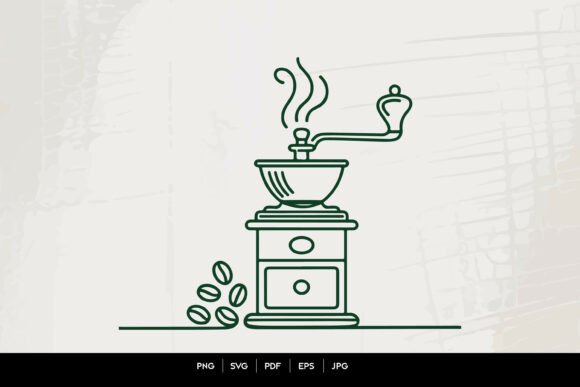
The mood of this piece is unmistakably cozy. It captures the essence of a slow morning without feeling cluttered. In the world of Illustrations and Graphics, simplicity often sells best because it translates well across different mediums. This coffee grinder silhouette relies on clean outlines rather than heavy fill areas, which immediately tells me about its potential versatility. For an embroidery project, this is crucial. Heavy fills can make small items stiff, but a line-based approach keeps the hand of the fabric soft.
The layout feels balanced, with the crank handle and the bean hopper providing enough visual weight to anchor the design. It doesn't scream for attention; instead, it invites a closer look. This subtlety makes it perfect for boutique branding where you want the product to feel high-end rather than novelty-like. Whether you are an Etsy seller looking to expand your kitchen decor line or a hobbyist making gifts, the visual personality here suggests quality and thoughtfulness.
Real-World Application: The Tote Bag Test
To truly evaluate this asset, I imagined a specific real-life scenario: creating a custom embroidered tote bag for a local coffee shop's merchandise launch. Tote bags are notoriously tricky; the canvas is thick, the weave is loose, and the surface is rarely perfectly flat. I envisioned placing the Vintage Coffee Grinder Line Art on a natural cotton canvas bag. Because the design is primarily outline-based, it would likely require a running stitch or a very narrow satin stitch to maintain its integrity.
In this context, the design shines. A heavy fill stitch might sink into the canvas weave, losing definition, but the linear nature of this grinder allows the thread to sit on top of the fabric texture, creating a tactile, premium feel. If I were stitching this for a client, I would lean towards a matte finish thread in a deep charcoal or espresso brown to mimic the look of old iron. The result would be a handmade product that feels authentic to the coffee culture it represents. It transforms a simple grocery carrier into a statement piece of custom apparel or accessory.
Versatility Across Products
Beyond tote bags, this design has legs in several other categories. For sweatshirt embroidery, the open lines work beautifully on fleece or French terry, provided the stabilizer is chosen correctly. On a baby onesie, scaled down appropriately, it becomes a charming nod to caffeine-loving parents without overwhelming the small garment. It also serves as an excellent candidate for an embroidered patch. If you digitize it with a merrow edge or a tight satin border, it could become a standalone product for craft fairs.
For those selling digital embroidery files, this type of graphic is a goldmine for printable mockups. The clean lines render clearly in previews, helping customers visualize the finished product before they buy. It fits seamlessly into collections focused on kitchen themes, retro diners, or farmhouse aesthetics. As a small shop product, it offers broad appeal for holiday gifts, particularly for Father's Day or Christmas, where personalized kitchen items are always in demand.
Technical Considerations and Fabric Challenges
While the design is strong, a professional reviewer must point out where caution is needed. Line art can be unforgiving if the stitch count is too low or the density is off. On stretchy fabrics like jersey knits, long runs of running stitches can pucker if not stabilized heavily. I would strongly advise using a cut-away stabilizer for any garment that will be washed frequently, such as t-shirts or aprons. Water-soluble stabilizers might dissolve too quickly, leaving the threads vulnerable to snagging on the loose weave of the fabric.
Dark fabrics present another consideration. Since this is outline art, you lose the ability to rely on white space to define the shape. If stitching on a black hoodie, you must ensure the thread color contrasts sharply. A metallic gold or silver thread could elevate the design, turning it into something suitable for evening wear or luxury branding, but standard polyester might get lost. Always test your thread colors against the specific fabric texture you plan to use.
Furthermore, pay attention to the hoop size. If the design includes tiny details in the grinding mechanism or the beans, scaling it down too much for a small cap or a pocket square could result in a muddy mess where individual stitches merge. Check the minimum recommended size before committing to a project. Curved surfaces, like baseball caps, require careful hooping to prevent distortion of the grinder's straight lines.
Maximizing Value and Professionalism
Using a well-chosen design like this directly impacts customer trust and brand consistency. When a client receives a personalized gift or a purchased item where the stitching is crisp and the design choice feels intentional, it reinforces the perception of quality. Sloppy or inappropriate design choices can cheapen a product instantly. The Vintage Coffee Grinder Line Art carries a level of sophistication that supports higher price points for your craft business.
For commercial embroidery projects, consistency is key. This graphic is simple enough that it should reproduce reliably across multiple units, ensuring that every item in a batch looks identical. This reliability is vital for bulk orders from cafes or corporate clients. It enhances buyer engagement because the image is instantly recognizable and emotionally resonant for coffee lovers.
Final Designer Notes and Best Practices
Before you commit to stitching this on a final product, treat it like any other critical design asset. Always stitch out a test on scrap fabric that matches your final material. This allows you to check the stitch density and see if any areas pull or gap. Review the file formats provided carefully. The listing mentions SVG, PNG, EPS, JPG, and PDF. While these are great for printing and cutting, ensure you have the actual embroidery file format (like PES, DST, or XXX) compatible with your machine, or be prepared to digitize the vector yourself if this is purely a graphic file.
Inspect the small details closely. Are the corners sharp? Does the crank handle connect smoothly to the body? These micro-details determine whether the design looks amateur or pro. Compare how it looks on light versus dark backgrounds to build a portfolio of options for your customers. Finally, confirm the licensing terms. If you plan to sell finished items or the digital files themselves, you need to know if the creator allows commercial embroidery use. Never assume; always verify to protect your business.
In conclusion, the Vintage Coffee Grinder Line Art is a versatile and aesthetically pleasing option for a wide range of projects. With the right technical approach regarding stabilizers, thread choices, and fabric selection, it can be the centerpiece of a successful product line. It bridges the gap between digital convenience and tactile craftsmanship, offering a solid foundation for creators who value both style and substance in their work.